
The $47 Billion Lesson: Why AI Fails the "Wisdom Test"
We’ve been lied to about change management. Steven J. Manning ($47B revenue leader) and Darrell Mann reveal why employees resist being "changed," and how leaders must act when the rules break down.

I confess, I used to get frustrated when teams resisted new technology. I thought they were being stubborn Luddites refusing to see the future.
But in my latest interview, I received a reality check from someone who has generated more revenue than the GDP of some small nations.
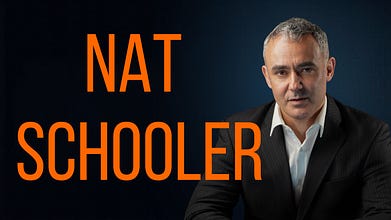
I sat down with Steven J. Manning, a business leader responsible for over $47 Billion in global commerce, and Darrell Mann, a systematic innovation expert and ex-Rolls-Royce Chief Engineer.
Steven dropped a truth bomb that completely reframed how I view leadership in the AI age, and it explains almost every failed change initiative I’ve ever seen:
“People don’t hate change. That’s nonsense. People enjoy the benefits of change—new cars, promotions, vacations. What they hate is being changed.”
Think about it. You love change when you choose it. But the moment a leader forces a new AI tool or workflow onto you without your input, your brain treats it as a threat to your autonomy. You haven’t introduced a tool; you’ve removed their agency.
If your strategy is to force compliance, you have already lost.
INFLUENTIAL VISIONS PODCAST will drop on all major channels this week so you can checkout the interview.
The “Wisdom Gap”
But the challenge goes deeper than just resistance. In this episode, Darrell Mann argues that we are facing a “Wisdom Gap.” We fear AI will replace executives, but Darrell defined Wisdom in a way no current language model can match:
“The wise person is the person that knows what to do when the rules don’t apply anymore.”
AI is a “Level 3” performer—competent at optimizing existing systems. But when the context shifts dramatically—when the rules break down—AI hallucinates. That is where you, the human leader, become irreplaceable.
The “Therapist Trap”
If leaders fail to bridge this wisdom gap, we end up in dangerous territory. We discussed a disturbing trend where employees are now turning to AI (like ChatGPT) as a “therapist” because the bot is “nicer” and listens better than their human boss.
Steven noted the danger of this trend: AI creates a “sterility of emotion.” It might simulate care, but it cannot actually care. If your employees feel psychologically safer talking to a chatbot than to their manager, your leadership culture is in crisis.
The System Decides (POSIWID)
Finally, we touched on a crucial systems-thinking concept: POSIWID (The Purpose Of The System Is What It Does).
Many leaders blame their people for not adopting AI. But as we discussed, the boss doesn’t decide the outcome; the system decides. If your system is designed to remove agency, it is perfectly designed to create resistance.
The era of the “Manager of Tasks” is ending. AI is taking those jobs. The future belongs to the “Architect of Culture” and the possessor of Wisdom.